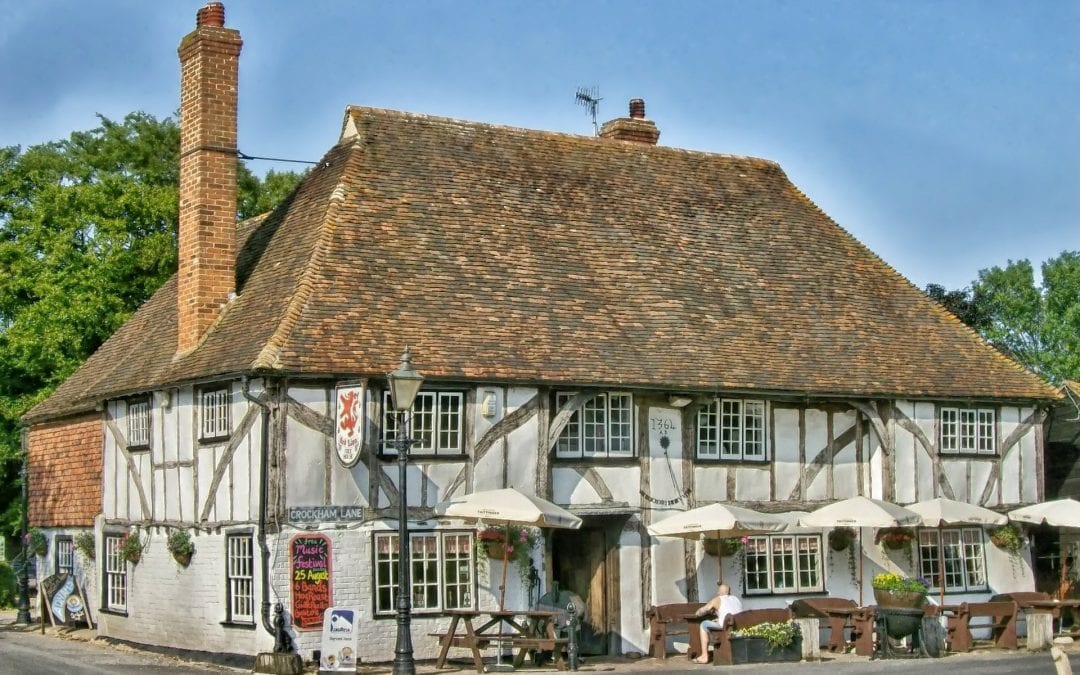
Most of us are familiar with the Red Lion pub. It is considered the most popular pub name in the UK. We are also familiar with claims from the UK’s most significant broadband and mobile providers stating that they cover 99% of the UK Population. Furthermore, The UK government claims that 95% of the UK premises have “superfast” broadband speeds. By reading these claims, the vast majority of the population believes that these claims are valid. But we must ask ourselves how much we can rely on these claims.
Now, this is where the pub comes in; with such bold claims from the Government and from mobile and broadband providers alike, surely, I should be able to sit in my favorite pub with the knowledge that I can jump on their “superfast” connection or make use of the very best mobile network. A similar report by DRF Consultants was done in 2020, so I thought I’d put these very claims to the test while also comparing the data from 2020.
As much as I’d have loved to tour 22 pubs across the UK to test this, I decided it’d be safer and cheaper to undertake this as a desk study instead.
Methodology
With the UK broken up into 11 regions, a Red Lion pub was chosen randomly in one major city and one rural area of each region in the UK. Results were recorded for the various broadband speeds available in each area and the mobile connectivity in each area.
Mobile Connectivity
Mobile connectivity is essential in today’s digital world. It plays a critical role in our daily lives, allowing us to communicate, access information, complete transactions, and stay entertained no matter where we are. This study on mobile connectivity focused on four providers, EE, Vodafone, O2, and Three.
While looking at the results, Vodafone and O2 were the strongest performers in 4G availability Indoors and Outdoors, with 95% coverage. However, EE’s 4G coverage was 86% good indoors and outdoors. EE and Ofcom state, “EE has 85%* 4G geographic coverage in the UK – that’s more than any other operator.” However, this study shows that EE’s 4g coverage isn’t as good as they portray. Furthermore, EE’s 4G coverage for good indoors and outdoors was at 72% in 2020, so they have seen a 13% growth, but Vodafone’s coverage in 2020 was already at 95% good indoors and outdoors. From what we have seen EE is lacking compared to its nearest competitors.
The mobile provider Three was always primarily known to struggle with connectivity Indoors, and in 2020 only 50% of their coverage had suitable indoors & outdoors. However, in 2023 Three has 91% good indoor & outdoor coverage showing a 41% increase. This is a massive growth in 3 years, surpassing EE’s coverage of 4g, which claims to have the best network.
UK’s 5G rollout began back in 2019. When 5G was rolled out, it promised us benefits and improvements, including faster data transfer, lower latency, increased network capacity, and many more. Furthermore, the UK government wants the “UK population to be covered by a 5G signal by 2027 so that the entire country can benefit from its social and economic advantages.” Unfortunately, in 2023, the 5G coverage in the UK is still inferior. EE has 64% without 5G access, Vodafone has 55%, O2 has 73%, and Three has 64%. The surprising provider is O2, as they showed great promise with their 4G coverage, but their 5G coverage, compared to over providers, has been significantly weaker.
Furthermore, the rural areas are far worse than the city/urban areas. EE has 82% without 5G, Vodafone has 91%, O2 has 91%, and Three has 91% without 5G. With this data, we can see in the 4 years of 5G being available, there has been an apparent lack of progress, and the question is, is the UK population going to be covered by 5G single by 2027?
UK’s Gigabit Broadband Commitment
The UK government’s manifesto was to deliver nationwide gigabit broadband by 2025. However, in November 2020, the government set a revised target for its gigabit broadband or fibre to the premises (FTTP) services to be available nationwide by 2030. This means that in seven years, all households across the UK will have access to 1Gbps or 1000 megabits download speeds. The 2030 goal, however, could be a far-fetched objective. The reason is Ofcom has “estimated that gigabit-broadband was available to 60% of UK premises at the end of 2021”. However, from the study I conducted on broadband speeds at the Red Lion pubs, only 6/22 (27%) of the pubs have access to FTTP.
Furthermore, comparing the data to 2020, there has been a slight increase as there were initially zero pubs with FTTP, and now six pubs have FTTP available. However, in 3 years, they could only cover 27% of the region, and on this trajectory, by 2030, the UK will only have 90% coverage by 2030, not achieving the target set. Obviously, 90% coverage nationwide would be a huge step forward for the UK. Still, this projection is only considered hypothetical as the UK may ramp up its infrastructure production or go in the opposite direction.
Furthermore, the surprising factor from this research was that half the FTTPs already working are from rural areas. This may be because digging the cables in rural areas is much cheaper than in the city, but seeing progress made in the rural regions is a positive step for the UK.
Growing up in Japan, it was a surprise to see the UK so behind when it came to FTTP. As of June 2022, Japan’s FTTP Coverage is 84% compared to the UK’s 8.6%. For me, it has always been a norm to have 500-800 upload speeds, and now living in the UK, I can only get up to 80Mbps, so at the start, I was shocked, and I thought it was due to the old flat I was living in. However, after conducting this research and understanding the current climate of the UK’s Telecom industry, I understand why my broadband is poor.
UK’s Superfast Broadband Commitment
The term “superfast fibre broadband” is a term that can be highly confusing in the UK telecoms world. When you see the word “superfast,” your immediate thought will be, “it should be very quick.” However, according to the UK government, a superfast broadband connection, commonly known as fibre to the cabinet (FTTC), will allow you to have download speeds of at least 30Mbps. Furthermore, the UK government claims that 95% of the UK premises have superfast broadband. The research found that 90% of the areas studied have FTTC available. Compared to 2020, there has been a solid increase of 13%, which is a positive sign for the country.
Furthermore, the average speeds in both the city and rural areas were over 60Mbps and compared to 2020, we see an increase of 5Mbps. However, similar to 2020, the area lacking FTTC and FTTP connections is the urban areas of London. From the study, we found that the download speed is 4Mbps in the City of London. This may be primarily because broadband providers historically tend to favor residential areas over business areas. Still, with no sign of improvement from 3 years ago, the question arises of when urban areas in London will get “superfast” broadband connections.
Impact of Alt Nets
Alt net is a term used to refer to alternative network providers. These companies provide telecom services that operate outside the traditional infrastructure owned by major providers. Alt nets usually provide newer technologies, and it is often proven to be cheaper than major providers. In the UK, there are countless alt-net providers, and the alt-nets are considered highly important to making a nationwide gigabit network and essential to creating a competitive market everywhere in the UK.
To measure the impact of the Alt nets, we looked at counties across the UK to see what Alt net providers were available. In all the counties searched, we found 44 Alt nets available (Excluding Duplicates) with an average monthly cost of £52.80, an average download speed of 904.01, and an average upload speed of 707. These are significantly better than major broadband providers because EE, for example, has three different plans, “Full Fibre Max 100”, Full Fibre Max 500,” and “Full Fibre Max 900”. “Full Fibre Max 900” plan, which is considered their “best plan” as the monthly price is £49 per month and average download speeds of 900Mbps and average uploads speeds of 110Mbps. So, despite the monthly costs being cheaper for EE, you get higher download and upload speeds by paying roughly £4 more for the Alt nets. Essentially, with the vast number of options with alt nets, you can choose your preference and save money.
Furthermore, within this research, we compared two counties, “Greater London” and “Hampshire,” to check if the alt nets run through the designated red lion pub we searched. The reason why we chose these two locations was that these two locations were the only two pubs with no availability in either FTTC or FTTP. In the London region, there are four alt nets available. Community Fibre, G. Network, Hey broadband, and Optify. After researching the websites of the Alt nets available, to my surprise, I found out that currently, no cables run through the area where the pub is located. Each website offers you the chance to register your interest in potentially digging cables through, but those prices for digging could make the pub go bankrupt. Secondly, we looked at a pub based in Hampshire. Within Hampshire, you have access to six alt nets. Box Broadband, Grayshott Gigabit, Swish Fibre, toob, Trooli, and Wessex Internet. After researching the websites of the alt nets, once again, none of the providers have cables running through this area. From this observation, we can see that despite having many alt-net providers, there is still a significant lack of infrastructure built to provide FTTP coverage. This could be due to high costs, low demand, or indolence.
In addition, when researching the alt nets, we found a massive disparity between the availability of the alt nets from county to county. For example, in Lincolnshire, there are ten alt nets available; however, in Nottinghamshire, a county close by only has one alt net available.
From this research, the vast difference in the availability of alt nets between neighboring counties highlights the need for more equitable access to technology infrastructure.
Overall, these alt-nets can potentially provide support to meet the UK government’s goals, but from my observations, even the alt-nets still have a lot of work to help support the commitment.
Conclusion
In conclusion, the claims made by the UK Government and mobile and broadband providers regarding their coverage and speeds are not entirely accurate. This study shows that the UK is still lacking in mobile connectivity, and the 5G coverage is far from reaching the levels promised. The rural areas are even more underserved, with a significant lack of progress made in the past four years. Additionally, the UK’s target of gigabit broadband nationwide by 2030 may be a far-fetched objective, considering the current progress rate. However, seeing progress made in rural areas is a positive step for the UK. Overall, this study highlights the need for more accurate and transparent reporting of the UK’s mobile and broadband coverage to ensure that the population can make informed decisions.